Complete 2026 Guide to Buying a Singapore Executive Condo

Associate Division Director · Huttons Asia Pte Ltd
CEA Reg: R050136D | Agency Licence: L3008899K
The Singapore EC landscape offers immense opportunities today. Here's what you need to know before making one of the biggest financial decisions of your life.
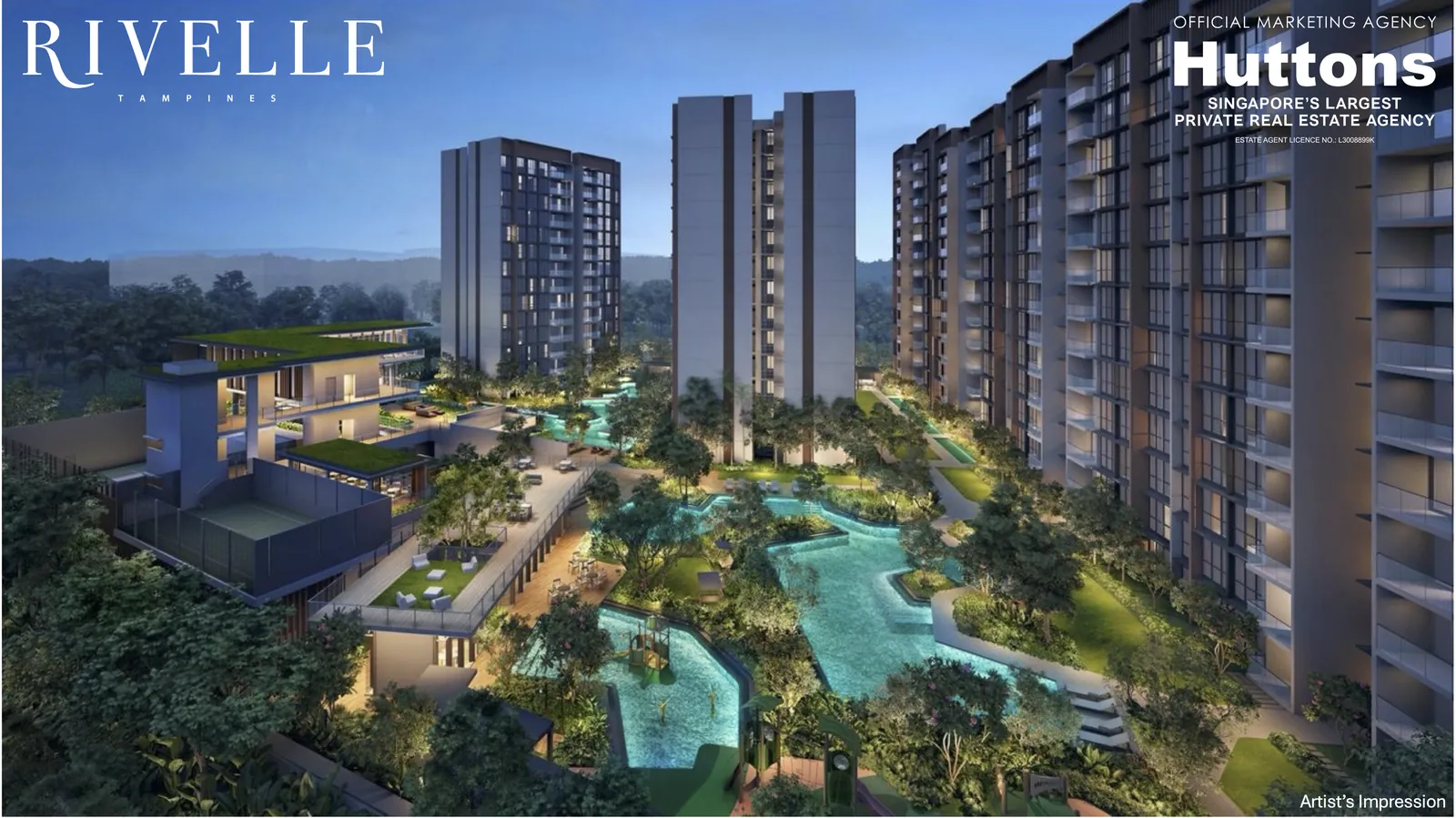
Figure 1: Artist's impression of Rivelle Tampines, the latest Executive Condominium launch in 2026
Let me cut straight to the chase. If you're thinking about buying an Executive Condominium in Singapore right now, you hold a decisive strategic advantage. Under Singapore's Pre-May 2026 EC rules, Executive Condominiums maintain the standard 5-year Minimum Occupation Period (MOP) and full eligibility for the Deferred Payment Scheme (DPS). While HDB Build-To-Order (BTO) flats under the Prime and Plus housing frameworks now enforce a strict 10-year MOP with severe resale clawbacks, EC owners can freely sell their homes to Singapore Citizens and Permanent Residents after just 5 years, reaching full privatisation to foreigners at year 10.
At singaporeec.sg, we've been tracking this market closely since our platform launched, and we've spoken to hundreds of buyers, sat through dozens of launch events, and crunched years of transaction data to understand what really moves prices in this space. This guide is the result of all that work our honest, unfiltered take on where the EC market stands today and how you should think about your next move.
Confused About EC Income & Subsidy Rules?
Citizenship status, income calculations, and resale levies are highly complex. Request a free, no-obligation assessment with our appointed EC consultant.
Before we dive in, a quick word on who this is for. This guide is written for the Singaporean family who has outgrown their HDB flat but isn't quite ready or able to jump into the private condo market. The household earning somewhere between ten and sixteen thousand dollars a month (or up to eighteen thousand for newer GLS parcels). The couple with young kids who want a swimming pool, a gym, and the peace of mind that comes with a 24-hour security setup, without paying two million dollars for the privilege. If that sounds like you, keep reading. We're going to cover everything prices, eligibility, financing, Pre-May 2026 EC rules rules, the projects worth watching, and the mistakes we've seen too many buyers make.
What Is an Executive Condominium, Really?
The Executive Condominium is one of those uniquely Singaporean inventions that makes perfect sense once you understand it, but confuses just about everyone at first glance. Here's the simplest way to think about it: an EC is a private condominium that wears "training wheels" for its first decade of life.
You buy it from a private developer names like Sim Lian, CDL, Qingjian, Hoi Hup. You get a strata title. You get the swimming pool, the gym, the tennis courts, the landscaped gardens, the function rooms, the whole package. From the outside, you literally cannot tell an EC apart from a private condo. I've stood at the entrance of Hundred Palms Residences and The Tenet side-by-side with private condos in the same neighbourhood, and nobody not a single person walking past could tell which was which without looking at the name.
But here's where it gets interesting. Under the pre-May 2026 EC rules, for the first 5 years from TOP, your EC is governed by HDB regulations, not private property rules. That means eligibility restrictions, income ceilings, a mandatory 5-year occupation period where you must physically live in the unit, and a subsidised entry price that sits roughly 20 to 30 percent below what a comparable private condo would cost. After 5 years, you can sell on the open market to SCs and PRs. At the 10th year, the unit reaches full privatisation.
The scheme was born in 1995, when the government recognised that a growing segment of Singaporean families were caught in the middle earning too much to qualify for significant HDB grants, but not enough to comfortably afford private condominium prices. These were the dentists, the engineers, the mid-level managers, the accountants. The people who had worked hard, built careers, and simply wanted a step up from public housing without breaking the bank.
The first EC, Eastvale in Pasir Ris, was completed in 1999. Since then, more than a hundred EC projects have been launched across Singapore, from Bukit Batok to Tampines to Punggol to Woodlands. And the model has worked remarkably well. At our last count, ECs have helped well over fifty thousand Singaporean families transition from public housing to private-tier living.
The genius of the scheme lies in the privatisation mechanism. After the 5-year MOP and the 10-year full privatisation timeline, every HDB restriction falls away. Your EC becomes indistinguishable from a private condo in the eyes of the law. Foreigners can buy it. Companies can buy it. You can rent it to anyone. And historically, that transition has triggered a meaningful price uplift because the pool of potential buyers suddenly expands from "Singapore Citizens and PRs only" to "literally anyone with money." That structural advantage subsidised entry price, private condo living, eventual full privatisation is why ECs under the pre-May 2026 EC rules have consistently outperformed private condos on a capital appreciation basis over the past two decades.
How EC Prices Got to Where They Are Today
The price story of Singapore's EC market over the past decade is one of relentless upward momentum. When our team first started tracking the market in earnest, median new EC prices were hovering around S$800 per square foot. Today, that same median sits at approximately S$1,750 per square foot more than double in just ten years.
Figure 2: Median Price Trends (S$ PSF) EC vs OCR Private Condo (2015–2025)
Our price tracking data shows new EC median psf climbing from S$798 in 2015 to S$1,754 in 2025 a 120% increase. OCR private condos rose roughly 95% over the same period, meaning ECs actually outpaced private property on a percentage basis despite starting from a lower base. Several forces have driven this appreciation, and they're all still active today.
Land costs have been the biggest driver. When developers bid for EC land parcels, they're competing in a market where the government deliberately limits supply. Between 2010 and 2014, an average of nearly eight EC sites were released each year. Since 2015, that average has dropped to just over two sites per year. Less land means more competition for each parcel, and more competition means higher bids.
In 2015, the average EC land rate was S$284 per square foot per plot ratio. By August 2025, CDL paid S$782 psf ppr for a Woodlands site. Then in January 2026, Sim Lian broke that record with a S$794 psf ppr bid for the adjacent Woodlands plot. That's nearly a threefold increase in land costs in just over a decade.
Figure 3: EC Land Bid Prices Trend (S$ PSF PPR)
What makes these land bids so telling is how close they are. At the January 2026 Woodlands tender, the top three bids were separated by less than S$35 psf ppr Sim Lian at S$794, a Qingjian-led consortium at S$790, and Hong Leong-TID at S$760. When three major developers are willing to pay within arm's reach of each other for the same piece of land, that's a strong signal of underlying confidence in EC demand.
Construction costs have added fuel to the fire. Labour shortages, supply chain disruptions, and general inflation have pushed building costs up by roughly 20% since 2021. Every dollar a developer spends on construction gets passed through to the buyer in the form of higher launch prices.
The GFA harmonisation that took effect in June 2023 removed a long-standing loophole where developers could include non-strata areas (like aircon ledges and planter boxes) in their GFA calculations without selling them. Buyers used to get this extra space essentially for free. Now developers must account for it differently, which effectively raises the per-square-foot price of the sellable area.
And yet and this is the part that still makes ECs compelling despite all the price increases the structural discount to private condos has held firm. In 2025, new ECs were trading at roughly a 23% discount to comparable Outside Central Region private condos. That discount has narrowed from the 30-plus percent we saw in the mid-2010s, but it still represents meaningful savings of around S$500 per square foot on average. On a typical 1,000 square foot unit, that's half a million dollars less at the point of purchase.
Figure 4: Structural Price Discount: EC vs Private Condo
URA transaction data shows that ECs enter the market with a massive structural discount gap.
That discount isn't going anywhere. It's built into the system. As long as the government restricts EC buyers to Singapore Citizen households with incomes below S$16,000 per month, and as long as EC land is sold at subsidised rates compared to private residential land, the entry price will always sit below what the open market would bear. For eligible buyers, that gap represents immediate built-in equity.
Who Can Actually Buy an EC?
The eligibility rules for ECs are strict, and they're the single biggest filter that determines whether this asset class is even relevant to you. At singaporeec.sg, we've seen too many buyers fall in love with a showroom unit only to discover at the eleventh hour that they don't qualify. Don't let that be you. Here's the non-negotiable checklist:
- Citizenship: At least one applicant must be a Singapore Citizen. Your co-applicant can be a Singapore Citizen or Permanent Resident, but PR-only households cannot apply.
- Income Ceiling: Your average gross monthly household income must not exceed S$16,000. This catches a lot of dual-income professional couples. If you and your spouse are both pulling in S$9,000 a month, you've hit the ceiling and you're out.
- Family Nucleus: You must form a family nucleus married couple, engaged couple (with marriage within three months of key collection), or parent and child.
- Property Ownership: You cannot own any property locally or overseas, and you cannot have disposed of one within the past 30 months.
- Previous Subsidies: If you've previously received a CPF Housing Grant or bought a subsidised HDB flat, additional restrictions and resale levies may apply.
Singles are largely excluded. The only pathway is the Joint Singles Scheme, which requires all co-applicants to be Singapore Citizens aged 35 or above. And even then, singles receive zero CPF Housing Grants for EC purchases.
If you do qualify, the CPF grants can help soften the blow. First-timer Singapore Citizen couples earning S$10,000 or below per month can receive S$30,000 in grants. Those in the S$10,001 to S$11,000 bracket get S$20,000, and the S$11,001 to S$12,000 bracket gets S$10,000. Above S$12,000, no grants apply.
| What You Need | The Requirement | The Reality |
|---|---|---|
| Citizenship | At least 1 Singapore Citizen applicant | Non-negotiable. PR-only households cannot apply. |
| Family Nucleus | Married, engaged, or parent-child | Singles are largely excluded from new EC purchases. |
| Income Ceiling | Household income ≤ S$16,000/month | Many professional couples hit this ceiling and are disqualified. |
| Property Ownership | No existing property; no disposal within 30m | Clean slate required. No HDB flat, no overseas property. |
| Previous Subsidies | Max one prior CPF grant or subsidised flat | Second-timers face additional resale levies. |
The S$16,000 income ceiling is the most common stumbling block we see. It was last revised in 2015, and given how much salaries have risen since then, an increasing number of households find themselves squeezed out. If you're in that position earning above S$16,000 combined your options are resale ECs (which have no income ceiling after the initial MOP period) or private condominiums.
Understanding the Executive Condominium Policy Framework
Executive Condominiums operate under a unique hybrid model established by the Ministry of National Development and HDB. Built and sold by private developers, ECs provide executive-level private condominium living while retaining government-backed affordability advantages under the pre-May 2026 EC rules:
- Standard 5-Year Minimum Occupation Period (MOP): From your Temporary Occupation Permit (TOP) date, owners must physically occupy the EC unit for 5 years. After 5 years, the unit can be sold on the open market to Singapore Citizens and Permanent Residents. You can also rent out the entire unit.
- 10-Year Full Privatisation: Exactly 10 years from the TOP date, the EC achieves full privatisation status under HDB regulations, meaning it can be sold freely to foreign buyers and corporate entities without restriction.
- Deferred Payment Scheme (DPS) & Progressive Payment (NPP): Buyers of uncompleted new launch ECs can choose between the Normal Progressive Payment (NPP) scheme and the Deferred Payment Scheme (DPS). Under DPS, buyers pay 20% downpayment (5% cash booking fee + 15% CPF/cash) and defer the remaining 80% loan disbursement until key collection (TOP).
- Upfront ABSD Remission for Upgraders: Existing HDB owners who are Singapore Citizens can purchase a new EC without paying upfront Additional Buyer's Stamp Duty (ABSD), provided they dispose of their current HDB flat within 6 months of collecting keys.
Figure 5: EC Pre-May 2026 EC rules vs HDB Prime/Plus BTO Timelines
(~3 Years)
(Year 3–8: Resale SC/PR)
(Y10+)
(~4–5 Years)
(Clawbacks & Caps)
(No Privatisation)
The visual comparison is stark. Under the pre-May 2026 EC rules, Executive Condominiums provide owners with unparalleled liquidity after just 5 years of MOP, followed by full privatisation at year 10. In contrast, buyers of HDB Prime and Plus BTO flats face a mandatory 10-year MOP on top of 4 to 5 years of construction, locking up capital for 14 to 15 years alongside subsidy clawbacks and strict buyer income caps on resale.
This makes the EC an exceptional vehicle for family wealth creation. A couple purchasing an EC can take advantage of subsidized pricing, live in a full-facility private condo environment, and have the freedom to monetize, upgrade, or reallocate their capital after just 5 years. That agility simply does not exist under BTO Prime or Plus models.
Key EC Pipeline Launches Under the pre-May 2026 EC rules
If you are planning your EC purchase, pay close attention to the major upcoming projects launching under the pre-May 2026 EC rules guidelines, offering standard 5-year MOP, Deferred Payment Scheme (DPS) eligibility, and up to 30% second-timer allocation.
| Project | Location | Developer | Units | Expected Launch | Why It Matters |
|---|---|---|---|---|---|
| Solano Grand EC | Bukit Panjang | CDL | 295 | Jan 2027 (est.) | 5-year MOP. DPS available. Bukit Panjang's first EC in 15 years. |
| Woodlands Drive 17 (Plot 1) | Woodlands | CDL | 420 | Dec 2026 (est.) | 5-year MOP. Sheltered walkway to Woodlands South MRT. |
| Woodlands Drive 17 (Plot 2) | Woodlands | Sim Lian | 560 | TBA | 5-year MOP. Record S$794 psf ppr land cost. |
| Sembawang Road EC | Sembawang | JBE Holdings | 265 | Q4 2026 | 5-year MOP. Boutique low-density living near Canberra MRT. |
| Miltonia Close EC | Yishun | Hoi Hup | 430 | 2027 | 5-year MOP. Views of Lower Seletar Reservoir. |
The Woodlands projects deserve special attention. Both sites sit beside Woodlands South MRT on the Thomson-East Coast Line, with a sheltered pedestrian link that means you can walk to the station without getting wet during Singapore's tropical downpours. The area is also positioned to benefit from the Johor-Singapore Rapid Transit System, which is scheduled to connect Woodlands North to Johor Bahru by end-2026.
Given the competitive land costs, we expect launch prices in the S$1,600 to S$1,900 per square foot range for the upcoming sites. Buyers at these projects enjoy the full suite of Pre-May 2026 EC rules benefits: standard 5-year MOP, DPS availability, upfront ABSD remission, and significant capital growth potential upon MOP.
What's Coming: The 2026–2027 Launch Pipeline
The 2026–2027 pipeline represents one of the most exciting periods for EC launches in over a decade. With multiple projects rolling out across key growth hubs, buyers have an abundance of choices across the North, West, and East regions.
Figure 6: Confirmed EC Supply Pipeline (2024–2027)
Rivelle Tampines already set the tone for the year, selling 92.5% of its 572 units over the March 2026 launch weekend at an average price of S$1,893 psf. That's one of the strongest EC launches we've ever tracked. The project's proximity to Tampines North MRT on the upcoming Cross Island Line, combined with the established amenities of Singapore's largest regional centre, clearly resonated with buyers.
Coastal Cabana in Pasir Ris reintroduced EC options to District 18 after a decade-long gap, selling 498 of 748 units on day one at S$1,734 psf. The seafront location near Downtown East and the upcoming CRL interchange at Pasir Ris MRT has been particularly attractive to East-side HDB upgraders who want to stay in the neighbourhood they've called home.
| Project | Location | Developer | Units | Est. Launch Price | singaporeec.sg Take |
|---|---|---|---|---|---|
| Rivelle Tampines | Tampines St 95 | Sim Lian | 572 | S$1,893 psf | Nearly sold out. One of the strongest launches on record. |
| Coastal Cabana | Pasir Ris | Qingjian JV | 748 | S$1,734 psf | ~18% units remaining. Strong location near CRL interchange. |
| Woodlands Dr 17 (Plot 1) | Woodlands | CDL | 420 | S$1,750–1,850 psf | Pre-May 2026 EC rules (5-yr MOP, DPS). Beside Woodlands South MRT. Highly anticipated. |
| Woodlands Dr 17 (Plot 2) | Woodlands | Sim Lian | 560 | S$1,800+ psf | Pre-May 2026 EC rules (5-yr MOP, DPS). Record land cost will push prices up. |
| Solano Grand EC | Bukit Panjang | CDL | 295 | S$1,700+ psf | Pre-May 2026 EC rules (5-yr MOP, DPS). Bukit Panjang's first EC launch in 15 years. |
| Miltonia Close EC | Yishun | Hoi Hup | 430 | S$1,570–1,800 psf | Pre-May 2026 EC rules (5-yr MOP, DPS). Reservoir views. Slated for 2027 launch. |
The northern cluster the two Woodlands projects, Solano Grand, Sembawang Road, and Miltonia Close represents over 2,000 units concentrated in one geographic area. That's the biggest supply injection the north has seen in years, and it should give upgraders in that region genuine choice for the first time in a long while.
Priority Bounced Units Waitlist
Missed out on fully sold-out projects like Aurelle of Tampines or Novo Place EC? Get immediate alerts when units are returned to the developer at original prices.
Our view is that this supply surge will moderate price momentum in the short term. Developers facing more competition may price more aggressively to move units quickly. But the underlying demand fundamentals a steady pipeline of HDB flats exiting MOP each year, low interest rates, and the structural affordability advantage of ECs suggest that any softening will be temporary rather than structural.
The Financing Reality: What You Need to Know
This is where a lot of EC buyers get caught off guard. The single most important financing fact is this: you cannot use an HDB loan for an EC. Even though it's classified as public housing during its first 10 to 15 years, HDB loans are simply not available. You must use a bank loan.
The down payment structure works like this: 5% in cash as a booking fee (non-negotiable), 20% from CPF or cash at the time of signing, and 75% financed through a bank loan. On a S$1.5 million unit, that means S$75,000 in cold hard cash upfront, plus another S$300,000 from your CPF or savings. The remaining S$1.125 million comes from your bank.
But the real complication is that EC buyers face a dual financing hurdle. You must satisfy both the Mortgage Servicing Ratio (MSR) and the Total Debt Servicing Ratio (TDSR):
| Framework | The Rule | What It Means |
|---|---|---|
| MSR | All property loan repayments ≤ 30% of gross monthly income | If your household earns S$14,000, your maximum monthly mortgage payment is S$4,200. |
| TDSR | All monthly debt obligations ≤ 55% of gross monthly income | Includes car loans, credit cards, personal loans everything counts. |
The MSR is assessed first, and for most EC buyers, it's the binding constraint. Here's a practical example. A couple earning S$14,000 per month combined can allocate a maximum of S$4,200 per month toward their mortgage under the MSR. At bank interest rates of around 3.5% with a 25-year tenure, that supports a maximum loan of approximately S$840,000. With a 75% loan-to-value ratio, this couple can purchase an EC valued at up to roughly S$1.12 million. In today's market, S$1.12 million doesn't get you a whole lot. Most three-bedroom EC units are transacting in the S$1.3 to S$1.8 million range. So this couple would need significant CPF savings or additional cash to bridge the gap. That's why CPF build-up matters enormously for EC buyers and why younger couples who haven't had decades to accumulate CPF may find the financing math challenging.
The interest rate picture has improved significantly. After peaking at 4.5% in 2022, bank fixed home loan rates declined to between 1.55% and 1.8% by late 2025, with most market watchers expecting stability or modest further declines through 2026. Lower rates improve affordability in two ways: they reduce monthly repayments and increase the loan quantum you qualify for under MSR constraints. For buyers looking at the five "last batch" projects where DPS is still available, there's one small financial wrinkle to note. DPS units traditionally carry a 2 to 3% price premium over Normal Payment Scheme units, reflecting the cash-flow convenience that DPS provides for upgraders who need to manage their finances before TOP.
EC or Private Condo? Our Honest Framework
This is the question we get asked most often at singaporeec.sg. And our answer is always the same: it depends on your timeline, your flexibility needs, and whether you even qualify for an EC in the first place.
If you're eligible Singapore Citizen household, income under S$16,000, no existing property and you plan to stay in your home for at least 10 to 15 years, the EC is almost always the better financial decision. Here's the math that convinces us: You enter at a 20 to 29% discount to comparable private condos. On a S$1.5 million EC versus a S$2 million private equivalent, that's S$500,000 less at the point of purchase. You get up to S$30,000 in CPF grants that private condo buyers don't receive. And you get the privatisation event that transition moment when your EC becomes fully private and historically re-rates 8 to 15% higher because foreigners can now buy it.
Historical resale data supports this strongly. ECs that reached completion between 2014 and 2019 delivered average resale profits ranging from S$546,000 to S$806,000 at MOP exit, with annualised returns of 6.4% to 9.0%. Private condos, over comparable 10-year holding periods, typically appreciated 18 to 28% in total. The EC's subsidised entry price creates a compounding advantage that private condos simply cannot match.
Figure 7: Average Historical Capital Gain at MOP Exit
Under the pre-May 2026 EC rules, the EC's 5-year MOP provides a well-balanced holding period. While private condominiums offer zero MOP restrictions, the EC's 5-year requirement is substantially shorter and more flexible than HDB Prime and Plus BTO flats with their 10-year MOP and subsidy recovery clawbacks. After 5 years, EC owners can freely sell on the open market to Singapore Citizens and PRs, or hold until year 10 for full privatisation. If you value complete freedom with zero MOP or earn above the EC household income ceiling, private property remains the alternative.
| Decision Factor | Choose EC If... | Choose Private Condo If... |
|---|---|---|
| Eligibility | You qualify (SC household, income < S$16k) | You don't qualify, or prefer no restrictions |
| Timeline | Plan to stay 10+ years | May need to sell or move within 5–7 years |
| Budget | S$1.3–1.8 million range | S$2 million+ budget, or need immediate rental income |
| Flexibility | Comfortable with MOP restrictions | Need freedom to sell or rent at any time |
| Grants | Want CPF grants (up to S$30k) | Don't need or want grants |
| Investment Goal | Long-term wealth accumulation | Short-term capital appreciation or rental yield |
Why Resale ECs Deserve More Attention
While everyone's fixated on new launches, we've become increasingly bullish on the resale EC market. Resale ECs—units that have already completed their 5-year MOP under the pre-May 2026 EC rules—offer something new launches simply can't: immediate flexibility. When you buy a resale EC, you inherit the freedoms that the original owner earned through their MOP period. You can rent out the entire unit from day one. You can sell whenever you want (to Singapore Citizens and PRs, if the EC is under 10 years old; to anyone, if it's fully privatised). And you pay 15 to 25% less than you would for a comparable new launch.
Think about what that means in practice. A five-year-old resale EC in Sengkang or Punggol still relatively young, with decades of lease remaining, likely near an MRT station gives you essentially the same product as a new launch at a meaningful discount, with none of the waiting, none of the construction risk, and none of the MOP restrictions.
Rental yields are attractive too. Post-MOP ECs in the Outside Central Region typically generate gross yields of 3.5 to 4.5%, compared to 2.8 to 3.3% for similar-aged private condos. That yield advantage comes directly from the lower entry price you're paying less per square foot, but the rental market doesn't discriminate between EC and private condo tenants. What fascinates us about the resale EC buyer profile is how local it is. Our tracking data shows that approximately 84% of resale EC buyers in 2025 were Singaporeans, with the remainder mostly Permanent Residents. This local-driven demand provides stability. Even during periods when foreign tenant demand softens as it did during certain phases of the pandemic there's a deep, resilient pool of local buyers and renters keeping the market liquid.
Our Straight Talk: Who Should Buy What
After years of analysing this market and speaking to hundreds of buyers, here's our unfiltered advice, broken down by who you are:
- First-timer couples in their late 20s or early 30s: Executive Condominiums offer an unbeatable pathway to private condominium living at a 20% to 30% discount compared to private new launches. With up to S$30,000 in CPF Housing Grants and a standard 5-year MOP under the pre-May 2026 EC rules, you can comfortably build home equity and raise a family without overstretching your finances.
- Second-timer HDB upgraders: Executive Condominiums remain your premier upgrading vehicle. You enjoy upfront ABSD remission and can leverage the Deferred Payment Scheme (DPS) to avoid servicing two mortgages simultaneously while waiting for TOP. With a 5-year MOP under the pre-May 2026 EC rules, you retain complete liquidity to monetize or right-size in the future.
- Upgraders planning long-term wealth preservation: Under the pre-May 2026 EC rules, the EC's 5-year MOP and subsequent 10-year full privatisation offer superior capital appreciation. Historical data shows post-MOP ECs appreciate 25% to 35%, outperforming private OCR condominiums from the same vintage.
- Existing EC owners: Your property continues to enjoy robust resale demand. With HDB Prime and Plus BTO flats bound by a 10-year MOP and resale restrictions, buyers seeking private amenities and rapid 5-year liquidity increasingly turn to the EC resale market.

Figure 8: An EC is ultimately a home where families grow together
Where Are Prices Heading?
Predicting property prices is always an exercise in humility, but we can share what our data and logic suggest for the road ahead. In the near term 2026 through 2027 we expect new EC launch prices to range from S$1,600 to S$1,950 per square foot, with premium locations commanding the upper end of that range. The Woodlands Drive 17 projects, given their prime MRT connectivity and growth catalysts, will attract healthy interest among upgraders and first-timers alike.
Several forces will push and pull prices in different directions. On the upside, land costs keep rising, construction costs remain elevated, and the pipeline of HDB flats exiting MOP each year is relentless every year, a new cohort of twenty thousand-plus HDB units completes their 5-year MOP, replenishing the pool of potential EC upgraders. Interest rates in the 1.5 to 2.5% range also make mortgages more affordable than they've been in years.
On the demand side, suburban ECs continue to enjoy solid fundamentals. The real value story remains the long-term: ECs have historically delivered 6 to 9% annualised returns over holding periods, and that structural advantage isn't going anywhere. The subsidised entry price, the standard 5-year MOP liquidity, the eventual privatisation premium, and the limited supply pipeline all work in favour of patient, long-term holders.
Quick Answers to Common Questions
- Can I buy an EC if I still own my HDB flat? Yes, but you must sell your HDB within six months of collecting your EC keys. Plan your timeline carefully you generally don't want to be caught servicing two mortgages simultaneously unless you have substantial cash reserves.
- Will I pay ABSD when upgrading from HDB to EC? Not if you sell your HDB first. Singapore Citizens pay zero ABSD on their first property. The EC purchase framework allows you to apply while still owning your HDB, provided you dispose of it within six months of EC key collection.
- How much cash do I actually need upfront? For a S$1.5 million EC, budget roughly S$150,000 to S$200,000 in total cash outlay. That includes the 5% booking fee (S$75,000), Buyer's Stamp Duty (S$44,600), legal fees, valuation fees, and initial furnishing costs. It's a significant sum, which is why second-timers with HDB sale proceeds have historically dominated the EC buyer pool.
- What are the MOP and payment scheme rules under the pre-May 2026 EC rules? Under the pre-May 2026 EC rules, Executive Condominiums have a standard 5-year Minimum Occupation Period (MOP) from TOP and full privatisation after 10 years. In addition, buyers are eligible for both the Normal Progressive Payment (NPP) scheme and the Deferred Payment Scheme (DPS). In contrast, the 10-year MOP applies to HDB Prime and Plus BTO flats.
- Are ECs still worth buying today? Yes, absolutely. Under the pre-May 2026 EC rules, ECs provide a 20% to 30% entry discount against comparable private condos, CPF Housing Grants up to S$30,000, 5-year MOP liquidity, and full privatisation to foreign buyers at year 10. This structural upside makes ECs one of Singapore's most reliable property assets.
Closing Thoughts
At singaporeec.sg, we believe the EC remains one of the most thoughtfully designed housing products in the world. It gives Singaporean families a subsidised pathway to private-tier living, rewards family commitment, and creates wealth for owner-occupiers under the pre-May 2026 EC rules. With standard 5-year MOP timelines, Deferred Payment Scheme availability, and full privatisation after 10 years, ECs stand apart from restrictive 10-year BTO frameworks. If you're eligible and find a unit in a location that works for your family's daily life, an EC is one of the smartest property decisions you can make in Singapore today.
Ready to Start Your EC Journey?
Connect with Jeffery Ng, our Appointed CEA Registered Huttons consultant, for VIP showflat bookings, floor plans, and priority price lists.